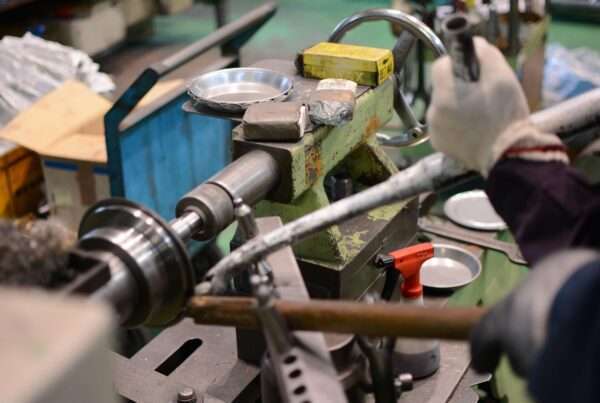
🧰 1. Introduction: Why ROI Isn’t Just a Financial Metric
“Imagine this: You just invested $45,000 in a shiny new CNC tube bender. The salesman promised precision, speed, and growth. But six months in, you’re still doing most of your jobs with your old manual bender. The new machine sits in the corner — complex, underused, and underperforming. Did you buy a solution… or a really expensive paperweight?”
That’s a story I’ve seen unfold too many times in my 30+ years working in tube and pipe fabrication.
The truth is — Return on Investment (ROI) isn’t just a number on a spreadsheet. It’s a strategic lens that determines whether your equipment pushes your shop forward or quietly drains your resources behind the scenes.
💡 What Is ROI Really in the Tube Bending World?
Most people define ROI as:
ROI = (Profit Gained – Investment Cost) / Investment Cost × 100
And yes, that formula works. But when you’re in the trenches — managing operators, quoting jobs, replacing worn-out mandrels — the real ROI shows up in:
- 🕒 Time saved between setups and tool changeovers
- 📈 Increased throughput without sacrificing precision
- 🚫 Reduced scrap rates from wrinkles, ovality, and wall thinning
- 🤝 Winning bigger contracts you couldn’t touch before
- 👨🔧 Easier operator training, safer workflows, and fewer breakdowns
When someone calls me asking if they should spend $40K on a used Pines CNC bender or $15K on a refurbished manual bender, I always ask:
“What’s the cost of not upgrading — in lost time, frustrated staff, or failed quotes?”
Because in real fabrication shops, ROI is both dollars and decisions. It’s about growth, risk reduction, and long-term capability — not just the sticker price of the machine.
✅ Next Up: Let’s break down how to calculate that ROI properly based on your unique jobs, cycle time, and overhead — starting with understanding your bending requirements.
- Key Entities That Affect Tube Bender ROI
When calculating ROI on a tube or pipe bender, it’s not just about what you pay — it’s about how every piece of your operation interacts with that machine. ROI is impacted by what we call key operational entities — foundational variables that either multiply your returns or silently drain them.
Let’s unpack the five most influential entities that shape ROI in real-world bending shops:
📌 1. Bender Type: Hydraulic vs. CNC vs. NC vs. Manual
Not all tube benders are created equal. The type of bender you choose determines:
- 🕒 Setup and cycle time
- 👨🏭 Skill level required
- ⚙️ Precision and consistency
| Bender Type | Pros | Cons |
| Manual | Low upfront cost, simple | Labor-intensive, limited precision |
| Hydraulic | Good for heavy-wall pipes, affordable | Slower, less programmable |
| NC (Numerical Control) | Semi-automatic, repeatable | Needs some manual adjustment |
| CNC | Fast, precise, multi-radius capable | High initial cost, steeper learning curve |
💡 Pro tip: A CNC tube bender may cost 3–5× more than a manual unit, but if you’re running 1000+ parts a week, it can pay for itself in less than a year.
📌 2. Application Area: What Industry Are You Serving?
Each industry demands different levels of precision, volume, and compliance:
| Industry | Typical Requirements |
| 🚗 Automotive | High-volume, tight tolerances, multi-radius bends |
| ✈️ Aerospace | Thin-wall tubing, ±0.5° accuracy, documentation-heavy |
| 🏗 Construction | Larger OD pipe, less precision, durability |
| ❄️ HVAC | Repeatable bends, affordable tooling |
| 🔬 Prototyping | Flexibility, quick setup, low-volume runs |
📊 Your application determines whether a $15K refurbished unit makes sense or if you need to invest $80K+ into a multi-stack CNC bender with automation.
📌 3. Tooling Investment: More Than Just Dies
Tooling is the hidden cost that often gets overlooked in ROI projections. For example:
- A mandrel set for thin-wall stainless could cost $2,000+
- Wiper dies need to be matched to radius, wall thickness, and material
- Stackable tooling can reduce changeovers but adds complexity and cost
🎯 Case insight: One of our clients switched from quick-change to stackable tooling and saved 12 minutes per setup — which translated into $18,000/year in labor savings on a 3-shift operation.
📌 4. Labor Cost vs. Automation
Ask yourself: how many skilled operators do you have?
- Manual benders = more hands-on time
- CNC benders = fewer operators but higher-skilled programming
ROI becomes clearer when you look at your labor cost per part. Even if a CNC machine costs more upfront, reducing labor by 1–2 hours per shift over a year can pay back your investment fast.
📌 5. Throughput and Scrap Rate
This is where the real money’s made (or lost).
| Factor | Manual Bender | CNC Bender |
| Parts/hour | 8–15 | 30–100+ |
| Scrap rate | 5–15% | <2% |
| Bend repeatability | ±2–3° | ±0.5° |
✅ Fewer mistakes, fewer reworks, more parts out the door = faster ROI.
Key Takeaway: ROI isn’t a single equation — it’s a network of operational choices. Every entity — from tooling to operator skill to industry demand — either pushes you closer to profitability or holds you back.
3. Formula for ROI in Tube/Pipe Bending Context
Investing in a tube or pipe bender isn’t just about comparing sticker prices. It’s about understanding what the machine gives back to your business — in saved hours, reduced scrap, faster setup, and broader capability.
📈 ROI Formula (Tailored to Fabrication)
At its core, Return on Investment (ROI) is a simple ratio. But in the world of fabrication and tube bending, that ratio reflects real labor, real waste, and real wins.
ROI =
(Net Annual Profit from Machine Use – Total Investment Cost)
÷ Total Investment Cost
× 100
📌 What Counts as “Net Profit” in Tube Bending?
It’s not just sales revenue. It includes all the ways your shop saves or gains:
| ROI Factor | Examples |
| Increased Revenue | New contracts for complex tube shapes |
| Labor Savings | Reduced operator time with CNC automation |
| Reduced Scrap | Mandrel bending cuts error rate from 12% to <1% |
| Faster Setup | Quick-change tooling and VFD controls |
| Lower Outsourcing | Bring previously subbed-out work in-house |
🔍 Real-Life ROI Example:
Let’s say you purchase a used CNC Tube Bender for $45,000.
- You eliminate outsourcing costs of $30,000/year.
- You reduce labor hours by $10,000/year.
- Your scrap waste drops, saving $5,000 annually.
Annual Gain: $45,000
Total Investment: $45,000
ROI = (45,000 – 45,000) ÷ 45,000 × 100 = 0% in year one
👉 You break even in Year 1, and everything afterward is profit.
🧮 Estimate Your ROI in 3 Minutes
Here’s a simple way to plug in your own numbers:
🔧 ROI Calculator (Manual Worksheet Version)
| Parameter | Your Value |
| 🎯 Machine Price (New or Used) | $________ |
| 🔧 Tooling & Setup Investment | $________ |
| 🕒 Annual Labor Hours Saved × Hourly Rate | $________ |
| 🧱 Annual Scrap Savings | $________ |
| 🛠 Additional Revenue (New Projects) | $________ |
Total Investment = Machine + Tooling
Net Annual Profit = Labor + Scrap + Revenue
👉 ROI = (Net Annual Profit – Total Investment) ÷ Total Investment × 100
👨🏭 Tip from the Shop Floor
“When I bought my first mandrel bender, I didn’t care about the math — I just wanted to stop paying outside shops. A year later, we had full control over quality, timing, and the parts looked 5x better. That’s ROI that spreadsheets can’t always show.”
4. Fixed and Variable Costs to Include in Your Tube Bender ROI
When calculating the return on your tube or pipe bender investment, most shops only consider the machine’s price tag. But true ROI lies in understanding both the fixed and variable costs that will impact your payback period and profitability.
As someone who has bent tens of thousands of tubes over 30 years, let me tell you: what you don’t calculate now will show up in downtime later.
📦 Fixed Costs: One-Time Investments That Build the Foundation
These are upfront, typically non-recurring costs — but they carry long-term weight in your ROI.
🏭 Initial Equipment Purchase
- This is the base cost of the bender itself — whether new, refurbished, or used.
- CNC tube benders range from $25,000 to $200,000, depending on automation, capacity, and brand (e.g., Pines, SOCO, Alpine, PHI).
⚙️ Tooling, Die Sets & Accessories
- Think mandrels, clamp dies, pressure dies, wiper dies, and stacked tooling kits.
- For multi-radius work, custom tooling is often required — expect to spend $2,000 to $10,000+ on initial tooling, especially for tight CLR (centerline radius) jobs.
👷 Installation & Training
- Don’t overlook shipping, rigging, calibration, and operator training.
- If you’re bringing in a VFD machine or CNC control unit, training can make or break your productivity curve.
Example: One Michigan-based shop spent $5,500 just to install and calibrate a used Pines #4 — but recovered it in 2 months through error-free production.
🔄 Variable Costs: Recurring Expenses That Impact Yearly ROI
These fluctuate with usage, time, and efficiency — and they directly affect your yearly net profit from the machine.
🔧 Annual Maintenance & Service
- Even solid machines like Leonard, PHI, or Pines require regular upkeep — oil changes, cylinder inspection, pressure testing, recalibrating dies.
- Budget $1,000–$3,000/year, depending on usage hours and machine age.
⚡ Electricity & Operational Costs
- CNC benders consume more energy than manual or NC benders. Consider:
- Hydraulic systems draw more power during clamping and draw bending
- Servo-driven benders offer energy savings in automated cycles
⏱️ Downtime (Hidden Killer)
- Manual benders = longer setup + higher human error
- Old machines = inconsistent tolerances + costly rework
- Factor in lost time per job — 15 minutes per part x 100 parts a week is 25 hours/month gone in inefficiencies.
💡 Pro Insight
“Buying a bender is only half the story. Your ROI suffers if you spend 3 days waiting on a replacement wiper die or can’t train your guy on the controls. Get a quote that includes tooling, freight, and training. Ask what’s in stock.”
🧮 Summary Table: Fixed vs Variable Cost Overview
| Cost Category | Fixed / Variable | Example Range |
| Machine Purchase | Fixed | $25,000–$200,000 |
| Tooling & Dies | Fixed | $2,000–$10,000 |
| Installation & Training | Fixed | $1,000–$6,000 |
| Maintenance & Repairs | Variable | $1,000–$3,000/year |
| Operational (Power, Lubricant) | Variable | $500–$2,000/year |
| Downtime / Setup Loss | Variable | $500–$5,000/month |
📌 Next Step: Add these into your ROI calculator to make an informed decision — not just on purchase, but on performance and payback.
5. Revenue & Cost-Saving Factors: How Tube Benders Pay You Back
When you invest in a tube or pipe bending machine—especially a CNC or semi-automatic model—you’re not just buying hardware. You’re unlocking a whole new level of operational efficiency and service capabilities. Below, we explore the key ways your new machine starts earning instead of costing you.
📈 Increased Job Capacity = More Work, More Revenue
Imagine this: Your shop gets a contract for 500 precision bends a week. A manual bender and two operators can’t keep up without overtime. But with a programmable CNC bender? You can triple output in the same shift—no extra headcount needed. More throughput means you can:
- Take on bigger contracts
- Reduce delivery lead times
- Handle rush orders without burnout
Case Insight: One Michigan-based fabrication shop reported a 42% increase in output volume after upgrading to a refurbished Pines #4 hydraulic bender—without hiring additional staff.
⏱️ Faster Turnaround Times (Manual vs. CNC Comparison)
| Feature | Manual Bender | CNC Tube Bender |
| Setup Time | 15–30 mins | 3–5 mins (saved profiles) |
| Avg. Bend Time (per part) | 1.5–2 minutes | 10–30 seconds |
| Repeatability | Low (operator-driven) | High (programmed precision) |
| Multi-radius Capability | Manual swap-outs | Stackable tooling ready |
A faster workflow means lower labor costs and happier customers. Speed equals competitive edge—especially in industries like automotive exhaust, aerospace, and HVAC where time is everything.
👷 Reduced Labor Hours per Bend
Manual tube bending demands experienced hands and muscle memory. But a CNC or NC bender reduces the skill dependency:
- One operator can manage multiple machines
- Programming replaces trial-and-error
- Consistent bends = fewer redos and adjustments
This means your shop can train junior staff faster and free up your senior technicians for higher-value tasks like prototyping or quality control.
✅ Improved Quality = Fewer Rejected Parts
Burrs, wrinkles, ovality—these are common in manual bends or underpowered machines. Precision tooling (mandrels, wipers, stackable dies) reduces:
- Wall thinning
- Deformation at tight centerline radii
- Out-of-spec angles or centerline shifts
Fewer rejected parts reduce scrap rates and material costs—especially important when bending stainless steel or aerospace-grade alloys.
🛠️ Offer More Complex Services = Higher-Margin Jobs
With advanced machines, your shop can now:
- Offer multi-radius parts
- Handle tighter centerline radii (1.5× OD or less)
- Work with high-hardness or polished materials
This opens doors to contracts that require engineering-grade specs—often at a premium price. Think of structural roll cages, industrial cooling coils, or complex medical equipment frames.
💬 “We moved from commodity bends to aerospace jobs with one upgrade. The ROI wasn’t just financial—it changed our entire customer base.” — Shop Owner, Ohio
6. How to Maximize ROI on a Tube or Pipe Bending Machine
A tube bender can be a powerhouse of productivity—but only if you choose wisely and optimize how it’s used. ROI (Return on Investment) isn’t just about what you buy—it’s how you deploy it, maintain it, and match it to your workflow.
Below are expert-backed strategies to squeeze the most value out of your investment.
🧠 Choose the Right Capacity for 80% of Your Jobs
“The best machine isn’t the biggest—it’s the smartest fit.”
Don’t overpay for a 6” capacity CNC bender if 80% of your workload is under 2” OD. Large-capacity machines come with:
- Higher tooling costs
- Greater energy consumption
- Slower ROI for small parts
Instead, analyze your bend logs: Look at volume, diameters, and materials over the past 12 months. Pick a machine that comfortably covers your core workload, not the occasional outlier.
♻️ Consider Refurbished Benders with Warranty
New machines are great—but refurbished units (like Pines, Leonard, or PHI benders) can deliver similar performance at 30–50% less cost.
Look for:
- Units fully stripped, rebuilt, and repainted
- Rewired controls with VFD (Variable Frequency Drives)
- Warranty or service support from trusted suppliers
✅ Example: Ultimate Tube Bender Parts Plus Inc. offers fully rebuilt Leonard 3CPV and Pines #4 benders with VFD upgrades and tech support—ideal for shops growing with control over costs.
⚙️ Invest in Stackable or Quick-Change Tooling
Tooling changeovers eat up valuable time. A well-optimized setup can:
- Cut setup time by 60–80%
- Enable multi-radius bending without tool swaps
- Reduce rework from misalignment
🔧 Stackable die sets are ideal for rotary-draw benders with collet or head-shift capabilities. They pay off quickly if you’re running short batches with radius variety.
“A tool that changes in 5 minutes vs. 30 saves you hours per week—and thousands per year.”
⚡ Bundle Automation or VFD Upgrade to Reduce Rework
Motor speed control, automatic mandrel retraction, or programmable sequences:
- Prevent common errors like kinks or ovality
- Provide repeatable accuracy at every cycle
- Let you run longer shifts with less fatigue
If your machine doesn’t support full CNC, adding retrofit options like:
- VFD motor control
- NC digital stop systems
- Hydraulic pressure sensors
…can still deliver CNC-like consistency without the full CNC price tag.
🏁 Final Tip: ROI Isn’t One-Time—It’s a Workflow Upgrade
Once the machine is in place, your real ROI comes from:
- Faster quoting (you know what you can bend)
- Fewer mistakes
- More contracts closed because you’re reliable
✅ 7. Frequently Asked Questions (FAQs)
Q: How fast can I break even on a $50K CNC bender?
It depends on how many hours your shop runs and what you charge per part. For example, if your bender saves 4 labor hours a day (at $60/hour), that’s ~$1,200/week. You’ll hit breakeven in under 12 months, even faster if you’re running multiple shifts or adding new contracts.
Q: Should I buy or lease a bender for short-term projects?
If it’s a 6–12 month contract with limited repeat work, leasing may reduce upfront risk. But if you’re doing consistent bending month after month, owning lets you build equity and gives flexibility to take on new jobs anytime.
Q: What’s a good ROI percentage in fabrication?
A solid benchmark is 30–50% ROI in the first year. But ROI isn’t just numbers—it includes:
- Reduced scrap
- Lower labor reliance
- Faster deliveries (which boosts customer retention)
Q: Is ROI higher on used or new benders?
Used benders often deliver quicker ROI due to their lower upfront cost—if they’re rebuilt correctly. New machines offer longer warranties and advanced automation, but cost more initially. Evaluate your workload and budget. For many shops, refurbished benders strike the perfect balance.
🏁 8. Conclusion: Is the Tube Bender Worth the Investment?
Absolutely—if you choose wisely and calculate thoroughly.
A tube bender isn’t just a machine. It’s:
- A productivity booster
- A hiring substitute
- A strategic edge when quoting fast-turnaround jobs
When you buy the right bender with the right tooling, you don’t just improve output—you increase the number of jobs you can confidently say “yes” to.
🎯 “If you’re quoting the same projects again and again, your bender should be your profit partner, not just a tool.”
👉 Next Steps
✅ Want a custom ROI projection?
Email us your job mix and expected usage—we’ll help you model out your payback period.
✅ Shop used and rebuilt benders backed by experience at:
🌐 benderparts.douglasaltonbrown.com/
Let your next investment bend more than just metal—let it bend your revenue curve upward