Used vs. New Tube Benders: Which One Makes More Sense for Your Fabrication Shop?
- Introduction: The Tube Bender Dilemma
Thinking of upgrading your tube bender? You’re not alone.
Maybe your current machine is struggling to keep up. Maybe your workload has outgrown your shop’s bending capacity. Or maybe you’re finally ready to invest in your own bender instead of farming out jobs. Either way, you’re standing at a crossroads: Should you go with a brand-new tube bender, or find a well-maintained used one and save some serious cash?
On the surface, it’s tempting to go straight for the cheaper option. But the real question is—which one actually makes more sense for your business in the long run?
This guide is built to walk you through exactly that. We’ll compare new vs. used tube benders in real, practical terms—not just specs and price tags. We’re talking:
- What’s the ROI on each option?
- How much downtime are you risking?
- What’s the reality of maintenance and repair?
- Can you finance used equipment like you can with new?
- And how long will each type of machine really last?
We know what it’s like—tight capital, growing customer demands, and that nagging fear of production delays. Buying the wrong bender can eat into your profits and slow your growth. But buying smart? That’s how shops scale.
Let’s cut through the noise and get into what actually matters when you’re about to spend real money on a tube bender.
II. Understanding the Two Options
A. What You Get with a New Tube Bender
So, what’s the deal with going brand-new?
Buying a new tube bender is like getting the keys to a factory-fresh car. Everything’s untouched, factory-calibrated, and loaded with the latest bells and whistles. Here’s what you’re really paying for:
- Cutting-edge features – Today’s top machines come standard with advanced CNC controls, energy-efficient systems, and multi-radius bending capabilities. You’ll also get smoother automation, better accuracy, and user-friendly software.
- Peace of mind – Most new machines come with a solid manufacturer warranty, ongoing tech support, and access to updates. That’s a big plus when you’re trying to minimize downtime.
- The flip side?
You’ll pay more upfront—sometimes double the cost of a used machine. Plus, lead times can stretch from weeks to months, depending on the model and customization.
B. What to Expect from a Used Tube Bender
Thinking used? You’re not alone—many shops swear by it.
Used tube benders are a smart move if you know what you’re buying—and who you’re buying from.
- Serious savings – You can expect to pay 30% to 70% less than new. That kind of discount can free up cash for tooling, staffing, or another machine altogether.
- Faster turnaround – Most used benders are in stock and ready to ship, meaning you can be up and running in days, not months.
- What’s the catch?
Used machines come with some baggage—normal wear and tear, outdated electronics, and limited (or no) warranty. And if you’re not buying from a trusted refurbisher, you might get stuck with hidden issues like leaking hydraulics or unreliable controls.
Bottom line?
New gives you predictability and long-term confidence. Used gives you speed and savings—but only if you do your homework.
III. Total Cost of Ownership: It’s More Than Just the Price Tag
When you’re weighing new vs. used tube benders, don’t stop at sticker shock. Owning a machine is like running a small business within your business—there’s way more to the cost than just what you pay on day one. Let’s break it down:
A. Upfront Cost Comparison
Let’s talk numbers.
- A used tube bender will typically cost anywhere between $15,000 to $90,000, depending on the age, condition, and level of refurbishment.
- A brand-new bender? You’re easily looking at $85,000 to $250,000 or more, especially for multi-stack or CNC models.
Financing terms differ too:
- Used machines may qualify for shorter-term leases or smaller business loans.
- New machines often come with structured OEM financing—but that can mean longer commitments and higher monthly payments.
B. Operating Costs
It’s not just what you buy—it’s what it takes to run it.
- Energy Efficiency: Newer benders often have power-saving features and smart drive systems, cutting your monthly electric bill.
- Tooling: If you’re switching brands or generations, make sure your existing tooling fits. Adapters aren’t always cheap—or available.
- Labor Skills: Got an old-school hydraulic bender? It might need a veteran operator to keep it consistent. Newer machines can often be run by lower-skill staff thanks to automated setups and digital controls.
C. Maintenance & Downtime
This is where things get real.
- New machines usually come with predictable maintenance schedules—and everything is fresh. But if something breaks? You could face a long lead time waiting on a proprietary part.
- Used benders, especially when sourced from a reliable refurbisher, can be easier to maintain. You may even have spares lying around. But yes, surprises can happen—like a leaky cylinder or a flaky PLC.
The key? Who you buy from matters. A good vendor can mean faster part swaps and honest pre-sale inspections.
D. Resale Value & Depreciation
Ever driven a new car off the lot? You already know.
- New machines lose value the second they hit your shop floor. Expect rapid depreciation in the first 3–5 years.
- A well-maintained used tube bender? That’s a different story. They can retain 60–80% of their value, especially if you’ve kept up with service and documentation.
Bottom line:
Don’t just chase the lowest price tag. Run the math on operating costs, financing, downtime risk, and what you might get back when you’re ready to upgrade again. The right machine isn’t just an expense—it’s an asset.

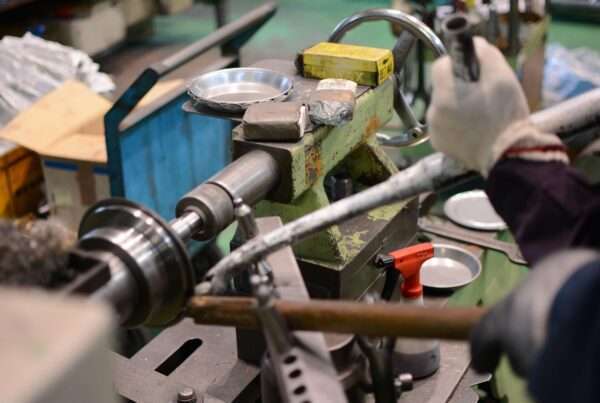
Used Pines Tube Bender for blog reference
C. Maintenance & Downtime: Who Keeps You Running When the Clock’s Ticking?
Let’s face it—downtime is the silent profit killer. Every hour a machine is down, you’re not bending parts, and your job schedule starts slipping.
New Machines: Predictable but Slow on Parts
With a new tube bender, maintenance is usually smoother—everything’s under warranty, and you’ll likely get a support hotline to call. But when something critical breaks, it might take weeks to get the part—especially if it’s coming from overseas or is a proprietary component. That can put you in a tough spot with tight delivery deadlines.
Used Machines: Faster Fixes (if Bought Smart)
Now, a good used bender might have a few miles on it—but if it’s well-inspected and sourced from a reliable vendor, you can often fix things on the fly. Used parts are typically easier and faster to get, and experienced techs already know how to work on them.
👉 Pro Tip: Always ask your vendor about spare parts availability and typical turnaround times before buying—especially for used models out of production.
D. Resale Value & Depreciation: What Happens When It’s Time to Upgrade?
Every shop evolves. Whether you’re scaling up or shifting focus, at some point, that bender will move out to make room for another.
New Machines: Steep Depreciation
Think of buying a brand-new bender like buying a brand-new truck. It looks sharp, runs great, but the second it’s on your shop floor, the value drops. Most new machines lose 20–40% in value within the first couple of years, even if they’re barely used.
Used Machines: Surprisingly Strong Value
A well-maintained used tube bender can hold its value exceptionally well, especially if you have service records and it’s from a reputable brand like Pines or Baileigh. Many shops can recoup 60–80% of their original investment when reselling—sometimes even more if demand is hot.
Conclusion:
Maintenance, downtime, and resale value aren’t just “later problems”—they should factor into your buying decision right now. Whether you go new or used, think beyond day-one pricing and focus on long-term impact on your workflow and wallet.
Want me to help you write the next section—IV. Performance & Capabilities: Do They Really Do the Same Job?
IV. ROI Reality Check: Which Option Pays Off Faster?
Let’s get real—choosing between a new or used tube bender isn’t just about specs. It’s about how fast it pays for itself and starts making you money.
Whether you’re running a small custom fab shop or a high-volume production floor, return on investment (ROI) is what separates a smart purchase from an expensive mistake.
Case 1: Small Shop, Low Volume — The Used Workhorse Wins
Example:
You’re a 3-person operation bending around 300 parts per month, mostly simple 1.5″ steel tubes.
- Used Tube Bender: Cost ~$30,000
- Revenue per month from added jobs: $5,000
- Payback time: About 6 months
Because you’re not maxing out machine cycles or chasing fancy automation, a solid, refurbished model can get you bending fast without tying up capital. And because used machines are often available immediately, you start earning right away.
Case 2: High-Volume Operation — New Pays Off Long-Term
Example:
You’re scaling up to automate production—say 5,000+ bends/month, multiple sizes, complex angles.
- New CNC Tube Bender: Cost ~$180,000
- Revenue from increased efficiency: ~$6,000/month in labor savings + $8,000 in new orders
- Payback time: Around 5 years
Here, the upfront cost is higher—but you’re saving on labor, reducing scrap, and winning more precision-heavy jobs. That means better margins, less rework, and consistent throughput.
Simple ROI Formula You Can Use:
ROI = (Added Annual Revenue – Total Cost) / Years in Use
For example:
- If a machine brings in $60,000 extra per year
- And it cost you $90,000 total,
- Used over 3 years, ROI is:
($60,000 – $90,000) / 3 = -$10,000/year ➝ not ideal
But if the same machine cost only $40,000 used, ROI becomes:
($60,000 – $40,000) / 3 = $6,666/year profit
👉 Moral of the story: ROI isn’t just about price—it’s about matching the machine’s capabilities to your shop’s reality.
V. Application Match: What’s Right for Your Workflow?
Not every tube bending job is built the same — and neither is every shop.
Before you sign that check or approve the financing, it’s smart to zoom out and ask:
What exactly will this machine be doing day in and day out?
🧰 Go with a Used Tube Bender if you…
✅ Run a low-to-mid volume shop
You’re handling 100–500 bends a week, mostly round tubes, with some variation but nothing too exotic. Your current workflow is steady — no need to reinvent the wheel. A well-maintained used machine can run like a champ for years if matched to the right jobs.
✅ Need a secondary or backup bender
Already have a high-end CNC on the floor? A second (used) bender for overflow work or simpler parts helps you keep production moving when the main line’s tied up — without draining your budget.
✅ Have solid in-house maintenance skills
Got a team that knows their way around hydraulics and servo motors? You’re in a great spot to get more value out of a used bender, especially if it comes from a trusted refurb supplier. You’ll avoid tech support wait times and keep downtime to a minimum.
🚀 Go with a New Tube Bender if you…
✅ Chase aerospace, defense, or medical-grade contracts
These industries don’t mess around — they demand tight tolerances, strict repeatability, and fully documented processes. New benders with advanced CNC controls, diagnostics, and traceability features are built for this level of scrutiny.
✅ Need automation, precision, and integration
If your workflow needs multi-radius tooling, auto-loading, or you’re feeding jobs straight from your CAD/CAM software, modern benders shine here. They’re built to integrate into smart production lines and ERP systems seamlessly.
✅ Can’t afford quality issues
Some shops are running lights-out shifts. Some are running exotic materials like titanium. If your customers demand repeatable, production-grade precision, going new might be a necessary investment — not a luxury.
🎯 Bottom Line?
Used or new, the best machine is the one that fits your real-world workflow — not just the one with the shiniest spec sheet.
Let me know when you’re ready for:
- Hidden Risks and Hidden Wins: What They Don’t Tell You Upfront
We’ll dive into dealer tricks, software lock-ins, and how to spot red flags when shopping for used or new benders.
VI. How to Inspect a Used Tube Bender Like a Pro
Buying a used tube bender can be a game-changing investment — or a costly mistake. The difference often lies in what you inspect before buying. Think of it like buying a used car: would you buy one without popping the hood?
Let’s break down what to look for before you sign the check or approve the purchase order.
🧾 Used Tube Bender Inspection Checklist
Here’s what seasoned pros always check:
🔧 Ram Alignment
Misaligned rams are a nightmare. They lead to poor-quality bends and expensive rework. Run a test bend and measure deviation.
🧠 Control Panel & Electronics
Check the display, buttons, and interface. Are the CNC controls responsive? Are there any error codes showing up? Look for patched wiring or signs of electrical shorts in the panel.
💧 Hydraulic Seals & Hoses
Leaks mean downtime. Inspect all hydraulic lines and seals — even a “minor” drip can turn into a costly issue fast.
🛠️ Tooling Wear & Compatibility
Check for pitting, scoring, or uneven wear. Confirm the bender is compatible with your existing tooling — or factor in the cost of retooling.
⚡ Electrical Cabinet
Open it up. Is it clean, labeled, and up to current code? Burnt smells or makeshift repairs are immediate red flags.
📦 Lubrication System & Moving Parts
A neglected lube system usually means the whole machine has been poorly maintained. Check for grease points, wear marks, and proper oil levels.
📚 Ask for These Before You Buy
✔️ Service Logs
A machine with a paper trail is almost always in better shape. Logs show whether it was maintained regularly or run into the ground.
✔️ Usage Hours
Just like miles on a car, total run-time gives you insight into how hard the machine’s been pushed.
✔️ OEM Support Availability
Is the manufacturer still around? Are parts and software still supported? Some older machines are “orphaned” — if a board fries, you’re out of luck.
🚫 Red Flags to Walk Away From
🚨 Visible Weld Repairs on the frame
That’s structural damage — not something you want in a precision machine.
🚨 No Test Run Offered
If they won’t let you see it run, there’s usually a reason — and it’s rarely a good one.
🚨 Excessive Noise or Vibration
That whine or chatter you hear? It could mean bearing wear, motor trouble, or internal misalignment.
🚨 Seller Can’t Answer Basic Questions
If they can’t tell you the last time it was serviced or what kind of bends it handled, that’s a red flag. Pass.
✅ Pro Tip: Bring a technician or third-party inspector with you. Even if you know what you’re doing, having an extra set of expert eyes can save you from a $20,000 regret.
VII. Financing & Buying Strategies
Smart Ways to Pay Less, Own Faster, and Sleep Better at Night
Buying a tube bender — new or used — isn’t just a technical decision, it’s a financial one. Whether you’re running a small fabrication shop or scaling up a high-output line, how you structure the deal can make a serious difference in your cash flow, tax bill, and ROI.
Let’s break down the smartest ways to finance, deduct, and source your next machine.
💰 Financing 101: Used vs. New Equipment Loans
Both new and used benders can be financed — but lenders treat them differently:
✅ New Bender Financing
- Lower interest rates (3.99%–7.99% typical for well-qualified buyers)
- Longer terms (up to 7 years)
- May include bundled service contracts, warranties, and tooling
- Easier to finance through OEMs or big equipment lenders
✅ Used Bender Financing
- Slightly higher interest rates (typically 6.99%–12%)
- Shorter terms (3–5 years)
- Often requires more due diligence: inspection reports, proof of service, etc.
- May be easier to get financing if you buy through a certified refurbisher or dealer who works with lenders
🔧 Tip: Some lenders specialize in financing used metalworking equipment. Find a lender that understands machinery and doesn’t treat your shop like a cupcake startup.
🧾 Section 179 Tax Deduction: Save Big This Year
Did you know you can write off the full purchase price of qualifying equipment — new or used — under Section 179 of the IRS tax code?
Here’s how it works (simplified):
- Buy and use the equipment before Dec 31
- Deduct up to $1.22 million in qualifying equipment purchases
- Applies to both new and used tube benders (as long as they’re used for business)
That means a $60,000 used bender could cut your tax bill by up to $18,000+ depending on your bracket.
📈 Pro Tip: Consult your CPA before the purchase — they’ll help you time and structure it for max tax benefit.
🏢 Certified Refurbisher vs. Private Seller: What’s the Smarter Move?
You’ll find used benders on eBay, Facebook Marketplace, auctions, and more — but who you buy from really matters.
| Certified Refurbisher | Private Seller | |
| ✅ Tested & inspected? | ✔ Yes | ❌ Maybe |
| 🧰 Warranty or support? | ✔ Often included | ❌ Usually not |
| 🔎 Usage history available? | ✔ Yes | ❌ Rarely |
| 💵 Financing available? | ✔ Sometimes | ❌ No |
| 🤝 Risk level | Low | High |
If you’re buying used for the first time, go with a dealer who refurbishes in-house. They’ve usually:
- Replaced worn parts
- Updated software (if CNC)
- Tested key systems
- Can offer tech support or service help after the sale
💡 Buying from a private seller? Always do an in-person inspection, ask for service logs, and try before you buy. If they won’t power it up — walk away.
VIII. Hidden Benefits Most Buyers Overlook
What the Sales Brochures Don’t Always Mention
Sometimes, the real value in your tube bender purchase lies in the non-obvious perks — the things that don’t show up in a spec sheet or price tag.
🆕 Buying New? You Also Get:
- Instant credibility with high-end clients (aerospace, defense, medical)
- Factory warranties and training that reduce risk
- Long-term vendor relationships — think free upgrades, faster support, and loyalty discounts
♻️ Buying Used? You Also Get:
- Faster install and production start (especially when buying locally or pre-refurbished)
- Lower insurance premiums in many cases (less capital risk = lower coverage cost)
- Flexibility to upgrade tooling or retrofit controls without voiding a warranty
🔍 Hidden gem: A well-maintained used machine might come bundled with thousands of dollars’ worth of tooling — something new machines often don’t include.
IX. Final Thoughts: There’s No One-Size-Fits-All Answer
This Isn’t Just a Machine — It’s a Strategy
At the end of the day, whether you go used or new should reflect your workflow, risk tolerance, and growth goals — not just your current budget.
Ask yourself:
- Am I trying to scale, or just stabilize operations?
- Do I have the crew and know-how to maintain older tech?
- Is this a stop-gap or a long-term cornerstone of production?
💡 A used machine might get you bending tomorrow. A new one might keep you bending flawlessly for the next 10 years. The right answer is the one aligned with your production strategy.
X. Talk to an Expert Before You Decide
Still weighing your options? Let’s talk shop — no pressure, just real answers.
📞 Call us: 810-844-0233
📧 Email us: info@benderparts.com
🏭 Visit us: 12820 Emerson Drive, Unit 1, Brighton, MI 48116
👷 Ask for David Ulrich — with 35+ years in tube bending, he’s seen everything from beat-up benders in barns to aerospace-grade automation lines.
Whether you’re upgrading, replacing, or just planning ahead, we’ll help you make the most informed, cost-effective decision — no sales pressure, just real industry insight.
Frequently Asked Questions
1. Is it better to buy a used or new tube bender for a small machine shop?
For low to mid-volume shops, a certified, refurbished used tube bender is often the more practical choice. It typically costs 30–70% less, requires shorter lead times, and delivers fast ROI if properly inspected. A new machine may only make sense if you’re gearing up for highly precise or regulated industries like aerospace or medical components.
2. What factors should be evaluated before financing a used tube bender?
Key points to evaluate:
- Credit terms and interest rates—used equipment financing usually has slightly higher rates.
- Asset condition and inspectability—lenders often require documentation like inspection reports and service logs.
- Resale forecasts—some certified refurbishers offer trade-in or resale agreements, improving your long-term ROI.
- Section 179 eligibility—used tube benders still qualify for full deduction if used for business.
3. How long do used tube benders typically last before needing major service?
A properly refurbished bender can run 5–10 years or more, especially with in-house maintenance and routine servicing. Major components such as hydraulic seals, ram cylinders, or electrical controls might need replacement sooner depending on usage. With good records, these machines can retain 60–80% of their value on resale.
4. What warning signs suggest a used tube bender is not reliable?
Egregious red flags include:
- Visible welding or structural repairs on key frame areas
- Significant hydraulic fluid leaks or low pressure
- Inconsistent CNC response or unlicensed/outdated control software
- Excessive vibration or noise during test runs
If these issues are present and not addressed transparently, it’s wise to walk away.
5. Can used tube benders be retrofitted to match modern CNC functionality?
Yes. Many shops take older mechanical or hydraulic benders and retrofit them with BendPro or similar CNC controls, servo drives, and modern HMI interfaces. This can provide modern automation at a fraction of the cost of a new multi-axis unit—but ensure the vendor provides functional electronics and trained support.
6. What is the average setup and lead time difference between new and used machines?
- Used stock units or refurbished machines: typically 1–2 weeks to inspect and ship.
- Custom-configured new benders: often 8–14 weeks, especially for specialty tooling or multi-stack systems.
If uptime and immediate production readiness matter, used equipment can dramatically reduce downtime risk.
7. Are warranty and support only available with new tube benders?
Not necessarily. Many certified refurbishers offer limited warranties—often 6–12 months with options to extend. They may also provide service agreements and remote diagnostics, especially for control upgrades. Always confirm warranty scope and parts availability before committing.
8. How does insurance differ between used and new equipment?
Insurers typically charge higher premiums on brand-new equipment, because replacement cost is higher. A used machine with verified condition and reduced insured value can qualify for lower premium tiers—especially in a factory-owned shop environment.
9. How do I calculate if a bender purchase makes financial sense for my shop?
Use this simplified ROI formula:
iniCopyEditROI = (Revenue from additional productivity – Total machine cost) ÷ Years in service
For example:
- If a used bender costs $40,000, generates $60,000/year in new work or labor savings, and runs reliably for 3 years, your ROI is:
bashCopyEdit($60K – $40K) ÷ 3 = ~$6,667/year
By contrast, a $180,000 new bender may take 2–3 years to pay back—but then deliver higher consistency and automation benefits long-term.
10. Can a used tube bender meet the standards of precision industries like aerospace?
Yes—if properly refurbished and documented. Many defense or aerospace job shops operate used machines with updated CNC controls, calibration certification, and documented repeatability testing. The key is documentation: you must show that the machine has undergone quality assurance processes and repeatability validation.
✅ Key Takeaway:
Whether you’re considering a used or new tube bender, the most crucial questions revolve around vendor transparency, condition documentation, support infrastructure, and long-term value—not just sticker price.
Need help building your own inspection checklist or comparing ROI scenarios? We can walk you through it.
📞 Call us: 810‑844‑0233
📧 Email us: info@benderparts.com
We’re here to guide you from decision to installation—no-pressure advice.