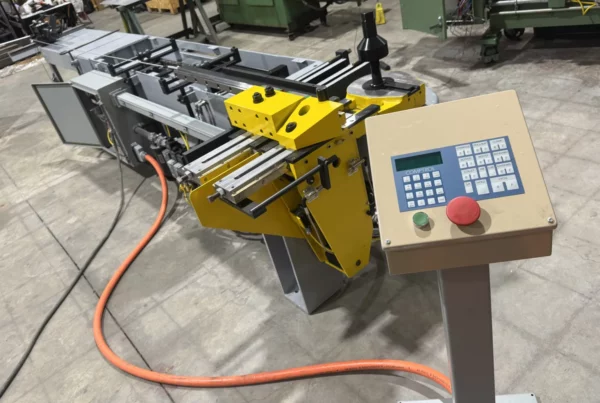
Manual vs CNC Tube Bending Tools: Capabilities, Use Cases & Selection Guide
Introduction
Manual and CNC tube bending tools serve distinctly different needs in industries like automotive, aerospace, HVAC, and custom fabrication. Where manual tools provide flexibility and low-cost access for basic operations, CNC systems deliver automated, repeatable precision at an industrial scale. This guide explores the complete difference in tooling, capacity, use cases, ROI, and machine intelligence—structured for semantic relevance and topical depth.
Abstractive Summary: This guide compares manual vs CNC tube bending tools in terms of bend precision, force application, cost, tooling complexity, and industry applications. It also outlines common mistakes, lifecycle metrics, and automation benefits in high-volume production.
Extractive Summary: Manual benders suit small-volume soft-metal jobs; CNC systems deliver precision and speed in industrial-grade tube forming. Factors include cost, bend complexity, automation, material, and volume. Missteps include wrong die size and springback misjudgment.
What Are Manual and CNC Tube Bending Tools?
Manual tube benders are mechanical devices operated by hand, ideal for soft tubing (e.g., copper, aluminum) under 1-inch OD. CNC tube benders use servo motors, sensors, and software to deliver precision bends with ±0.1° accuracy across complex geometries.
Example: An HVAC tech uses a manual lever bender for ⅝” copper lines. An aerospace OEM uses a CNC mandrel bender for 1.5″ titanium airframe tubing.
Types of Tubing Bending Tools
- Manual Tube Benders
Best for: Low-volume, on-site jobs
Manual benders rely on operator effort. Ideal for soft materials like copper, aluminum, or thin-wall mild steel, and suitable for plumbing, HVAC, and small fabrication jobs.
- Examples: Ridgid, Imperial
- Limitations: Can’t handle tight radii or hard metals without risk of collapse
- Hydraulic Tube Benders
Best for: Medium to heavy-duty applications
Hydraulic benders use pressurized fluid to apply consistent force across the tube. They can bend larger diameters and tougher materials like stainless steel and DOM tubing.
- Common in automotive frame building and heavy industrial fabrication
- Offers more precision than manual tools
- Electric Tube Benders (Semi-Automatic)
Best for: Production shops needing speed and consistency
These use electric motors and programmable settings to improve accuracy. You’ll still need manual setup and clamping, but bending becomes consistent with minimal labor.
- Ideal for repeat jobs in light manufacturing
Best for: High-volume, high-precision environments
CNC (Computer Numerical Control) benders can handle complex, multi-plane bends with minimal human input. They’re essential in sectors like aerospace, medical equipment, and automotive exhaust manufacturing.
- Extremely precise
- High upfront cost, but ROI is excellent in production environments
A mandrel is a support device inserted into the tube to prevent it from collapsing during the bend. It’s essential for thin-walled tubing or when a tight radius is required.
- Mandrel Bending: Clean, wrinkle-free results
- Non-Mandrel: More affordable but can distort the tube
How to Choose the Right Tubing Bending Tool
Choosing the right tool depends on a mix of factors:
- Tube Material
- Soft metals (copper, aluminum): Manual or electric benders
- Hard metals (stainless, Inconel, titanium): Hydraulic or CNC with mandrels
- Wall Thickness
- Thin-walled tubing requires mandrel support
- Thick-wall tubes need higher torque and precision
- Bend Radius & Complexity
- Tighter radii need better tooling and die selection
- Multi-axis bends require CNC
- Production Volume
- Low: Manual or semi-auto
- Medium to High: CNC
- Budget Constraints
- Manual: ~$300–$800
- Hydraulic: $2,000–$10,000
- CNC: $20,000 and up
Common Mistakes to Avoid When Using Tubing Bending Tools
- Wrong Die Selection
- Using the wrong die diameter leads to ovality or kinking
- Improper Clamping
- Poor tube alignment causes inconsistent bend angles
- Ignoring Springback
- Metals like stainless steel can “spring back” slightly—overbend is required
- Underestimating Centerline Radius (CLR)
- Too tight a CLR for your material causes collapse or wrinkling
Best Tubing Bending Tools by Industry
- Automotive: Mandrel-equipped hydraulic or CNC benders for roll cages, exhaust systems
- Aerospace: CNC benders with full simulation support
- HVAC: Manual benders for copper tubing
- Medical: High-precision CNC benders with fine CLR control
- Construction: Hydraulic benders for structural tube work
Tubing Bending Tool Maintenance & Safety Tips
- Clean dies and mandrels regularly to prevent buildup
- Inspect hydraulics and electrical connections routinely
- Use PPE: Gloves, eye protection, and ear protection
- Secure tubes properly before bending to avoid recoil
Manual Tube Bending Tools – Capabilities
Manual tube bending tools use mechanical force applied by an operator to form bends. These tools are ideal for low-volume production, field service repairs, and custom fabrication jobs. They offer portability and cost-effectiveness, requiring minimal setup and no power source.
-
Bend Control: Operator-dependent with visible degree markings; requires skill to maintain consistency.
-
Tooling: Limited to smaller OD tubes (¼” to 1″) and simpler dies (e.g., radius die + clamp die).
-
Bend Types: Capable of single-plane, wide-radius bends. Multi-radius or compound bends are not practical.
-
Material Compatibility: Suitable for soft metals (aluminum, copper) and thin-walled steel tubing.
-
Cost: Typically under $300–$800 depending on capacity and brand.
-
Setup Time: 2–5 minutes per bend. No programming or calibration needed.
-
Production Rate: 1–2 bends per minute under ideal conditions.
✅ Manual tube benders are best used for prototyping, on-site modifications, or where cost and simplicity are priorities.
CNC Tube Bending Tools – Capabilities
CNC (Computer Numerical Control) tube benders offer automation, multi-axis precision, and repeatability at scale. These machines are designed for high-volume, tight-tolerance, and complex tube geometries across industries like aerospace, automotive, and medical devices.
-
Bend Control: Automated, programmable angles, radii, and sequences with up to ±0.1° precision.
-
Tooling: Multi-stack tooling support (e.g., wiper dies, mandrels, collet clamps, pressure dies).
-
Bend Types: Single, compound, serpentine, and 3D bends supported in a single setup.
-
Material Compatibility: Can handle stainless steel, titanium, Inconel, and heavy-wall DOM tubing.
-
Cost: Machines start around $30,000 and scale to $500,000+ for fully integrated systems.
-
Setup Time: 10–30 minutes for tool changeover; negligible per-part programming for repeat jobs.
-
Production Rate: 8–25 bends per minute with consistent output.
✅ CNC tube benders are indispensable for automated production environments demanding consistent, tight-tolerance bends.
Capabilities Comparison Table
| Feature | Manual Bender | CNC Tube Bender |
| Tube OD Range | ¼” – ⅞” | ¼” – 6″ |
| Accuracy | ±2–5° | ±0.1° |
| Bend Speed | 5–15 seconds | 1–3 seconds |
| Radius Repeatability | Manual-dependent | Software-controlled |
| Ideal Material | Copper, Aluminium | Steel, Titanium, Inconel |
| Setup Time | Instant | 30–60 mins per job |
| Cost Range | $200–$800 | $20K–$150K |
Manual Tube Bending Tools: Use Cases and Limits
Entity: Manual Tube Bender
Attribute: Use Context
Value: Field-based HVAC and plumbing installations with low volume
- Best for low-stress, thin-wall tubing
- Works with OD < 1″
- Low upfront cost
- Requires human force and skill
Industries:
- HVAC (soft copper)
- Custom fabrication shops
- Low-volume prototyping
Limitations:
- No automation
- Accuracy varies with user experience
- Not suitable for high-strength alloys
CNC Tube Bending Tools: Use Cases and ROI
Entity: CNC Tube Bender
Attribute: Automation
Value: Programmable motion with closed-loop feedback
- Performs multi-radius, compound bends
- Uses mandrel and wiper dies to maintain tube shape
- Stores bend programs for repeatability
- Reduces cycle time and labor costs
Industries:
- Aerospace (titanium, aluminum)
- Automotive chassis & exhaust systems
- Medical instrumentation
Quantified ROI:
- Reduces scrap by 85%
- Speeds up production by 400% over manual
- Pays back in 12–18 months at 1000+ bends/month
How to Choose: Manual vs CNC Tube Bender
Tube Material:
- Aluminum/Copper = Manual
- Steel/Titanium = CNC
Wall Thickness:
- < 0.049″ = Mandrel + CNC
- 083″ = Manual possible
Bend Complexity:
- Simple 90° = Manual
- Compound angles, 3D bends = CNC
Volume & Scale:
- ≤50 bends/month = Manual
- ≥1000 bends/month = CNC
Budget Constraints:
- Manual: Ideal for <$1K budgets
- CNC: Investment class capital asset
Common Errors in Bender Selection
Mismatched Die Set:
Wrong die OD or CLR can cause kinks. Always match tooling to tube spec.
Ignoring Springback:
Aluminum = 1–2°, Stainless = 3–4°. CNC can auto-compensate; manual requires user adjustment.
Improper Lubrication:
Mandrel systems require grease every 500 bends. Dry friction deforms tubing.
Over-Bending Without Testing:
Always trial 1–2 sample bends before final job for tolerance validation.
Maintenance Checklist for Long-Term Use
| Component | Manual Tool | CNC Tool |
| Die Set | Inspect every 1,000 bends | Replace after 15,000–20,000 bends |
| Frame | Grease pivot joints | Lubricate ball screws & servo rails |
| Software | N/A | Update firmware every 6 months |
| Calibration | N/A | Verify bend arm zero-point monthly |
Frequently Asked Questions
Q1: What tube size is best for manual bending?
1/4″ to 7/8″ OD copper or aluminum is ideal due to the low required force.
Q2: Can CNC benders handle multiple diameters?
Yes. CNC machines use programmable tooling stacks and auto-die changeovers.
Q3: What is the learning curve for CNC benders?
Initial setup takes 2–3 weeks of operator training with CAD/CAM integration.
Q4: Are manual benders suitable for stainless steel?
Only for OD < 1/2″ and wall > 0.035″. Otherwise, spring back and collapse occur.
Q5: How often should I calibrate a CNC tube bender?
Monthly calibration is advised for optimal axis alignment and bend repeatability.
Q6: Can I bend stainless steel tubing with a manual bender? Only if the wall thickness is low and the bend radius is generous. Otherwise, you risk collapse or cracking. A hydraulic or electric bender is better.
Q7: What’s the minimum bend radius for a tube? Usually 2–2.5 times the tube OD, but it varies by material. Always refer to the bend radius chart provided by your tool manufacturer.
Q8: Do I always need a mandrel for bending? Not always. For thick-wall tubing or gentle bends, you can skip it. But for thin-wall or tight-radius applications, mandrels are essential.
Q9: How long do tube bending dies last? With proper care and use, quality dies can last several years. The biggest factor is material hardness and frequency of use.
Q10: What is spring back in tube bending? It’s the tube’s tendency to return slightly toward its original shape after bending. You must over-bend slightly to compensate, especially with high-strength alloys.
Final Thoughts
Manual tube benders deliver cost-effective solutions for basic, low-volume jobs. CNC benders offer precision, automation, and long-term ROI in high-volume, high-accuracy industries. Choosing between them depends on the material, bend complexity, tolerance, and production volume. A wrong tool wastes time, materials, and labor. Choose smart, bend smarter.
The right tubing bending tool isn’t just about price—it’s about precision, material compatibility, safety, and long-term ROI. Whether you’re doing one-off race car frames or thousands of HVAC coils, understanding your tooling options helps you avoid costly mistakes.
If you’re still unsure, consult a tooling specialist or run a few test bends. After decades in this trade, I can tell you this: the tool you choose today determines the quality of your bends tomorrow.